
Digital product / 2026
CineVault
A film for tonight. A collection for later.
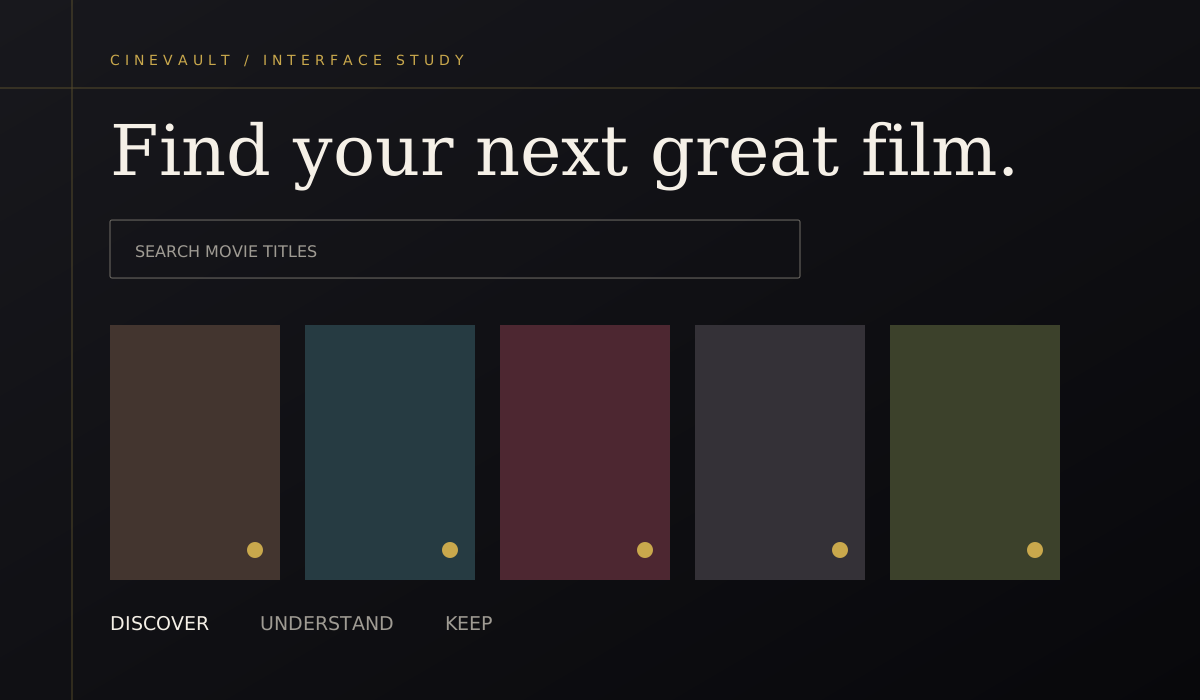
A movie-discovery application that turns browsing into a personal watchlist through a direct journey: find a title, understand it and save it without creating an account.
Explore live project ↗- Project
- Self-initiated concept
- Role
- Interface Design + Front-End Development
- Built with
- React · Vite · OMDb API
01 / The brief
Less deciding. More discovering.
Film browsing can become a loop of opening tabs, forgetting titles and starting again. CineVault keeps discovery, understanding and saving in one focused experience.
The project began as a Frontend Simplified React final and was independently refined for this portfolio. The refinement focused on interface hierarchy, mobile navigation, accessibility, resilient data handling and honest project documentation.
02 / Product journey
Three steps. One place.
- Discover through a considered collection or title search, with curated selections clearly distinguished from catalogue results.
- Understand a film through its synopsis, cast, director, runtime and published ratings.
- Keep a title from a card, featured selection or details view, then return to the saved watchlist without registration.
03 / Design decisions
Cinema sets the tone. Usability sets the pace.
Playfair Display gives film titles the presence of a cinema programme. Barlow supports longer reading, while condensed labels and restrained gold accents clarify controls.
The featured collection begins still. Playback is optional, pauses during interaction and respects reduced-motion preferences. Mobile retains the same collection access and save actions as desktop.
04 / Engineering
Small components. Clear responsibilities.
- React Context separates discovery, watchlist state and theme preferences.
- A same-origin server endpoint validates OMDb requests, keeps the API key out of the client and applies bounded caching.
- Superseded searches are cancelled; film enrichment uses limited concurrency and retains partial successes.
- Native dialogs contain focus and restore it to the opening control when dismissed.
05 / Scope & verification
A focused product with room to grow.
CineVault is a portfolio application, not a streaming service. Film information and posters come from OMDb. Watchlists remain in the current browser; trailer links open labelled YouTube searches. No user-research outcome or commercial metric is claimed.
The production build and eight server/data tests passed during the project review. Browser checks covered loading, search, pagination, sorting, dialogs, saving and reload persistence across responsive layouts.
A useful next research step is observing people as they discover, save and revisit a title, then using those findings to prioritize filters or cross-device storage.
EXPLORE THE WORK